Muñequitas Elisabeth is a mexican video producer for children songs/videos. They started making videos with Ana Celia, a cute young singer that became the xuxa of the new underage fapping generation.
After some cool synth songs they became bigger with more crew on the videos like Jacko el payaso or Nina la bailarina. New songs are mostly really bad, but there are some cool pirate costumes on the videos and some cool covers like this one. They also switched powerpoint-like backgrounds to some crappy 3d landscapes.
Coming out from mp3 crds I got offered from friends, hours of intensive donwloading on some peer to peer softwares and few song trades with other colombians djs are selected tracks of what I presume could be described as modern champeta sounds (which DJ Champeta Man from Palenque Rds once confirmed me).
Sampling madness for what could sound like some answer to brazilian funk music. Vids on youtube are better than any attempt to describ for those champeta mezclas...
Also, regarding the quality for the uploaded song I don't know if those are live recording or studio ones but I'd say most of them seem to be total live improvisation.
Kodiak Bachine is an organic and electronic progressive one-man band from the great country of Amazon river, Iguazu falls and kings toucans.
He played during the 80's an electronic avant-garde music with some productions references to the incredible extravagance of brazilian vegetation and the mystic of life, instead of mechanicals thematics and electronics first semblances. A kind of mix bettween A. Jodorowsky, Kraftwerk and François de Roubaix. Before his solo carreer, he played solicitating in a band called Agentss, in the same axis, but with a bit less of flamboyance (for me).
His great hit is called "Electicidade" 1982, and the video won lots of awards :
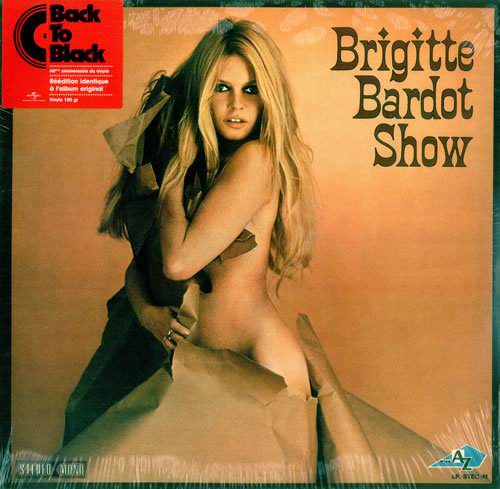
A back from the grave extract from this 1982 french synthpop LP following a first 1980 7"appearance (with a cover of La Belle de Cadix).
Produced by a Berlow / Liberman tandem (who later both moved to the world of major music business), it features the mysterious "Lise" and her BB style vocals + a consequent collection of synths provided by a credited shopkeeper that lead them all to some fields familiar with Telex or Mikado. As you'll notice from the pic, expect a general comedy abuse, but, like this Affaires Etrangères tune, record has its very good moments.
For this radio mixtape made on demand for both french magazine Telerama radio and french blog Le Musicassette, Gangpol & Mit took the opportunity to pay tribute to music and people who were influential in the making of their new record, subjectively united here under the temporary banneer of international music exchanges, mutant folkloric reappropriations, western/eastern connexions and carefully traded exoticisms in what I imagine as an old-time open international noisy harbour.
For such a legal podcast, I allowed myself to include or quote more classically celebrated bands than usual, that maybe will sound quite obvious to you. Howere, I hope that the thread will make sense, from mambo electronics to dangdut upgrades, blended traditionnal sources, and an occasional anglo-saxon tiny spoon of lyrics.
Hello everybody , i am Dj No Breakfast, a new bee on Cartilage Consortium.
I am pleased to introduce to you a nice little compilation "tropical bass for kids". This is a collection of music produced/composed by Green Pepper Boy from Amsterdam between the years 2000 and 2006, as he said "be careful with your ears/speakers because the track are NOT MASTERED!"
Expect flutes, bongos, electronic sounds, video games anthem, singing kids, human frogs, pollitos and a bunch of fun samples!
As far as I can remember, I came across E.E. music nearly 3/4 years ago. At that time there was a myspace account linked with the whole Dick El Demasiado, Sonido Martines or Los Siquicos Litoraleños. "I wanted to believe" but also find out who was hiding behind El Entraterrestre. I tried to get in touch & had for only answer: "thanks for the hospitality" !!??!!
Behind the quite uninspiring "Afrosound" name, hides one of Discos Fuentes's best formation the record label ever released. Afrosound was a chicha music inspired band from Colombia. As "cumbia" was a colombian native music style & "chicha" some sort of peruvian cousin (with its typical psych guitar playing mixed with amazonian & huaynos elements), the case is pretty strange...
Following my metal post i'd like to express my best wishes for the year 2011. Hope it will be a happy one. So, to go that way, let me propose you one of my personnel exhilarating Tropical anthem.
Elio boom is the king of Champeta a musical genre, which is born under the crossed influence of african music (soukouss, afrobeat, highlife) & Caribbean stuff (Soca,ragga): a funny mixture made for the sound system of the Cartagena's ghetto .
I love Trash Metal, but it's a such conservative music style ! So when I find several good examples of Latin metal stuff, I want to tell it to the whole world.
While spending some time on the youtube looking for modern andean music I got stuck on those kind of vids coming out from Ecuador.
I was absolutely blown away with that bizarre mix of folkloric "altiplanos" music elements blended with the cheapest form of today's dance music. Sadly, it's pretty hard to get any information about it. I've been questionning some of the uploaders, and thankfully one of them sent me some music plus a little explanation...
Although it isn't by far the most popular music in Quito, "tecno sanjuanitos" (as it seems to be named) is hugely popular among ecuadorian andean people, with a consequent number of hits sung in various indigineous languages (Kishwa generally).
----------
The cdr's i was sent were mostly filled with anonymous "Carnaveles Megamix", but there were also a few compilations dedicated to specific artists such as "Los Conquistadores" and their "Mike Jaggeresque" leader.
Water incantation & bizarre spells as taken from the new "Roots Of Chicha" compilation, covering peruvian psych pop classics... Not as essential as the first volume which was an absolute winner (remember the J.S. Bach "For Elise"'s cover) but still blend with mesmerizing songs.
Syrian born producer & musician Henri Debs played a major role in the 60's & 70's French Carribean music scene. Raised in a record shop-owning family, he is known as the first middle east oriental interpreter of creol music & proclaimed himself the new Antillean music savior:
"Disques Debs sauveur de la musique antillaise. Si on la défend de nos jours c'est que Debs l'a sauvée jadis"
Here on a Baden Powell cover, along with singing partener Serge Cristophe with whom he recorded several 7" singles & LP's...
To end comes a latin infused track with insane & chanting scat from martiniquean pianist Marius Cultier. Depsite the fact Cultier never reached popularity, he was the first artist to employ the "ZOUK" term. At last, I sincerily advice you not to start with the only cd rendition entitled "morceaux choisis vol. 1" which disppointed me quite much as more versed on the jazz virtuoso side of the artist.
---------------------------------------------------------------- > Read First Part (Philogene Astasie & Kassav) > Read Second Part (Les Vikings & Eric Cosaque) ----------------------------------------------------------------
Extract of a 2005 must-have cd reissue still avalaible here, Saizansu mambo is maybe the most representative hit of Tony Tani. As a beloved popular actor, he also stays in the memories of many as a master of the abacus, tirelessly demonstrating his percussive skills on that tool year after year along family tv programs.
Although this TV appearance is from 1982, the original version from the 50s is a pure old school mambo classic. Therefore, he easily could be seen as a japanese alter-ego of the french Bourvil: both had this unique ability to build and camp a sympathic and memorable comic character, doing a crossover between movies and chanson and sneaking their personnality into these typical 50s latin instrumentals, from mambo to rhumba.
Enjoy a quick comparison between this frenchy nugget and these two movies extracts in which appear his two biggest hits: Saizansu mambo and Bukubuku mambo:
Both belong to a recent past that often appear dusty to youngsters: being too much in the light among your dad's generation blinds most of the wannabe trendy, although Tony Tani is still sympathic to most of the initiates.
As often with such classic icons belonging to popular culture, a now sold out 1988 remix attempt was released on 7" just after his death in July 1987, an item I discovered thanks to the precious Record Battler monthly live stream event: a use of sampling that is typical in the techno kayo 80s period, alongside interesting shuffle TR808 patterns, although it didn't completely preserve the specific groove of the original version.
First artist from Hong Kong to appear on American TV, Grace Chang had such success singing in the Dinah Shore show that Capitol records shortly decided to release a LP afterwards, sung in chinese, but split between an A-side blended of various wordwide styles (Mambo, Calypso, Hawaïan...), and a more traditionnally chinese B-side.
Liner notes try to both explain and justify the use of these various musical styles more familiar to american people: "The colorful port of Hong Kong, one of the busiest in the world, is a melting pot of music from all over the world. Businessmen, travellers, immigrants, students, sailors, everybody brings his music (or musical preferences) when he comes to Hong Kong, and the result is a free exchange unmatched anywhere else. In the selections of this Miss Chang dips into a world-wide variety of styles, and comes up with a demi-dozen of surprises to delight you."
I love Cha cha is an extract from the 1957 movie Mambo Girl, classic but charming musical produced by MP and GI film studio (main rival to the Shaw Brothers). This huge commercial success definitely turned her into one of these delightfully out of time musical icons, a statu confirmed later by various killer sequences like this 1960 floating carmen cover extract from The Wild, Wild Rose:
I attended my first ufologist diner last week at La Defense. Never saw such a cross-eyed traffic in a cafeteria. The first case was presented by a new age grandpa in white socks, explaining us why this triangle thing upon his car the 5th November of 1990, could not be a B2. I was watching his fuzzy slide show, wondering how satellite imagery had not solved the question of ufos yet. I mean, for better or worse, and I really want to believe in extra terrestrials. Are there too much clouds over Google Earth, who really runs those orbital cameras, and what the hell happened to Major Tom ?
Well, these three covers answer clearly. He encountered a technical problem. Some say that Tom was attacked by aliens, others that David Bowie is an alien himself. The mystery remains unsolved, but let’s hear it.
The Space oddity was first covered in 1971 by Gérard Palaprat, two years after David Bowie. The french translation is more nostalgic, with true pieces of poetry if we include a guy painting rainbows in the sky, and the evocation of the Major’s mother. Tom finally overcomes his home sick, but too late, the ground control turned russian.
The second cover was released in 1974. It’s a parody by a duo of humorists, Los Hermanos Calatrava. This one appears to be the most political, and stands a dramatic dialogue between Tom and Ground Control. I don’t get Spanish but aliens surely do. Anyway you don’t have to be bilingual to hear the crash at the end. They also did a movie remake of E.T. with their feet.
The third one is a chorus of young Canadians calling the lost Major. Their lament is heart breaking and was produced by their teacher, Hans Fenger, in 1976. Some of you have probably heard about the Langley Schools Music Project. They covered songs from the Beach Boys, Neil Diamond, Herman’s Hermits and the Beatles. David Bowie liked their version a lot. This precious recording should be kept on earth and buried very deeply, if we don’t want the Little Grays to compete in colleges and mess with our girls.